Wisdom Teeth Removal in Northern Nevada
Wisdom Teeth Removal That Puts Your Comfort First
Whether your dentist has referred you, your teenager’s wisdom teeth are beginning to develop, or you’re experiencing pain or swelling, Sierra Oral & Facial Surgery can help you understand what is happening and determine the right next step.
Our experienced oral surgeons provide personalized wisdom teeth evaluations, comfortable treatment options, and attentive support throughout recovery.
Expert Oral Surgery Care
Advanced surgical training for routine and complex wisdom teeth cases.
Personalized Anesthesia Options
A comfort plan based on your procedure, health history, and needs.

Guidance Before and After Surgery
Clear preparation instructions, recovery support, and follow-up care.
What Are Wisdom Teeth?
Wisdom teeth—also called third molars—are the last teeth to develop, usually appearing during the late teenage years or early twenties.
Some wisdom teeth grow into a healthy position and function normally. Others do not have enough room to emerge properly, become difficult to clean, or remain partially or completely trapped beneath the gums or jawbone.
What Does It Mean When a Wisdom Tooth Is Impacted?
An impacted wisdom tooth cannot fully emerge into the mouth. It may be:
- Completely enclosed within the jawbone
- Covered by gum tissue
- Partially erupted through the gums
- Growing at an angle toward another tooth
Partially erupted wisdom teeth can create spaces where food and bacteria collect. Fully impacted teeth can also affect the surrounding bone, nerves, or neighboring teeth.
Do Wisdom Teeth Always Need to Be Removed?
All Wisdom Teeth can become infected and should be removed. A wisdom tooth can develop problems without causing immediate pain. Just because they haven’t cause any problems yet does not mean that they won’t become an issue as you age.
An examination and appropriate imaging allow your oral surgeon to evaluate each tooth and recommend removal or continued monitoring based on your individual needs.
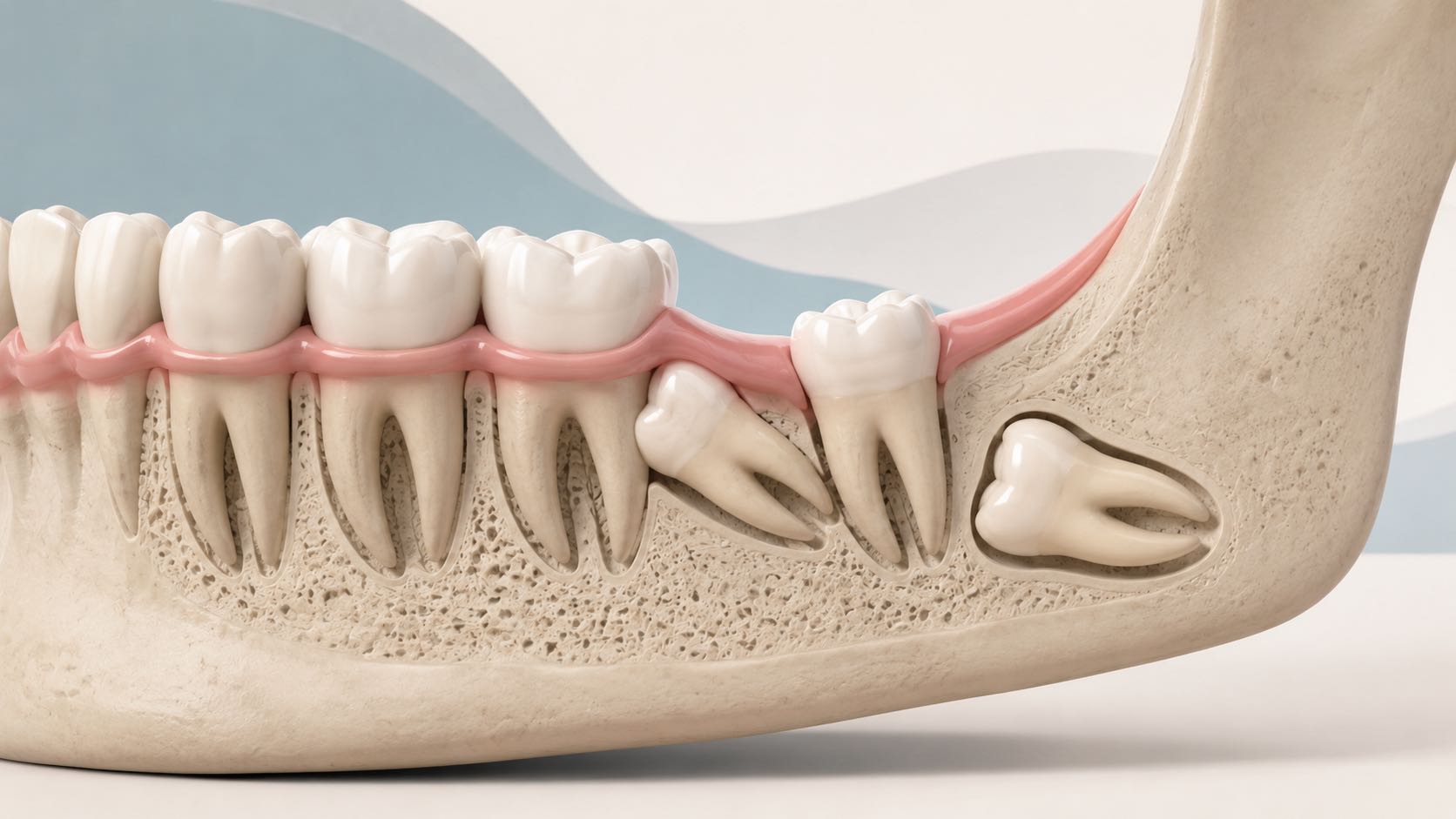
Impacted Wisdom Teeth
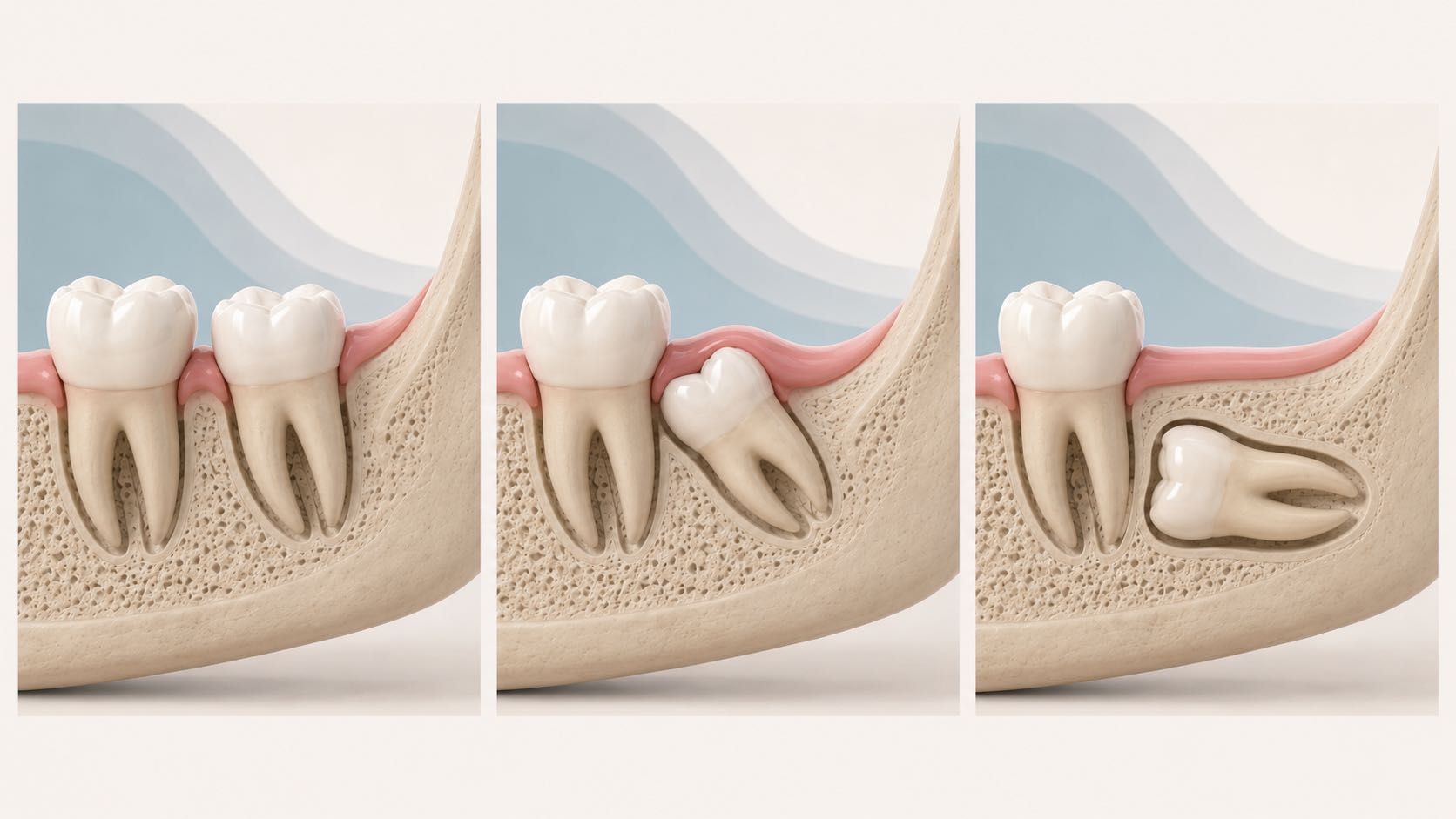
The Stages of Impacted Wisdom Teeth
Why Should You Consider Wisdom Teeth Removal?
Your dentist or oral surgeon may recommend removing one or more wisdom teeth when there is an existing problem or a significant risk of future complications.
Pain, Swelling or
Jaw Stiffness
Pressure from an impacted or partially erupted wisdom tooth can cause pain, swelling, tenderness, or difficulty opening your mouth. These symptoms may indicate inflammation or infection and should be evaluated before the problem becomes more uncomfortable.
Infection Around
the Tooth
When a wisdom tooth only partly emerges, bacteria and food can collect beneath the surrounding gum tissue. This may cause recurring infection, inflammation, an unpleasant taste, or swelling around the back of the mouth.
Tooth Decay or
Gum Disease
Wisdom teeth sit at the very back of the mouth, where effective brushing and flossing can be difficult. Plaque and food buildup may lead to cavities or gum disease around the wisdom tooth and neighboring molar.
Damage to
Neighboring Teeth
A wisdom tooth growing at an angle may press against the molar beside it. Over time, this pressure and trapped bacteria can contribute to decay, bone loss, or damage around the neighboring tooth’s roots and supporting gums.
Cysts or Jawbone
Changes
An impacted wisdom tooth may occasionally be associated with a fluid-filled cyst or other changes in the surrounding jawbone. Dental imaging helps your surgeon identify these concerns early and recommend the most appropriate treatment or monitoring.
Timing Can Make
a Difference
When removal is appropriate, treatment may be easier for younger patients because the roots are less developed and the surrounding bone is typically softer. Your surgeon will consider age, tooth position, symptoms, and overall health when recommending the right timing.
When Should You Schedule an Evaluation?
Consider arranging an evaluation if you or your teenager is experiencing:
- Pain near the back of the mouth
- Swollen, tender, or bleeding gums
- Recurring infection or an unpleasant taste
- Jaw stiffness or difficulty opening the mouth
- Difficulty cleaning around partially erupted teeth
- A recommendation from a dentist or orthodontist
- Wisdom teeth that have not yet been professionally evaluated
You do not need to wait until wisdom teeth become painful. An evaluation can provide clarity, even when no immediate treatment is necessary.

What to Expect From Sierra Oral & Facial Surgery
Our philosophy is simple: People First, through Compassion, Comfort and Expertise. From your initial consultation through post-surgical follow-up, we want you to feel informed, supported, and confident in your care.
Step 1
Consultation and Imaging
Your visit begins with a conversation about your symptoms, health history, medications, and any concerns you have about surgery.
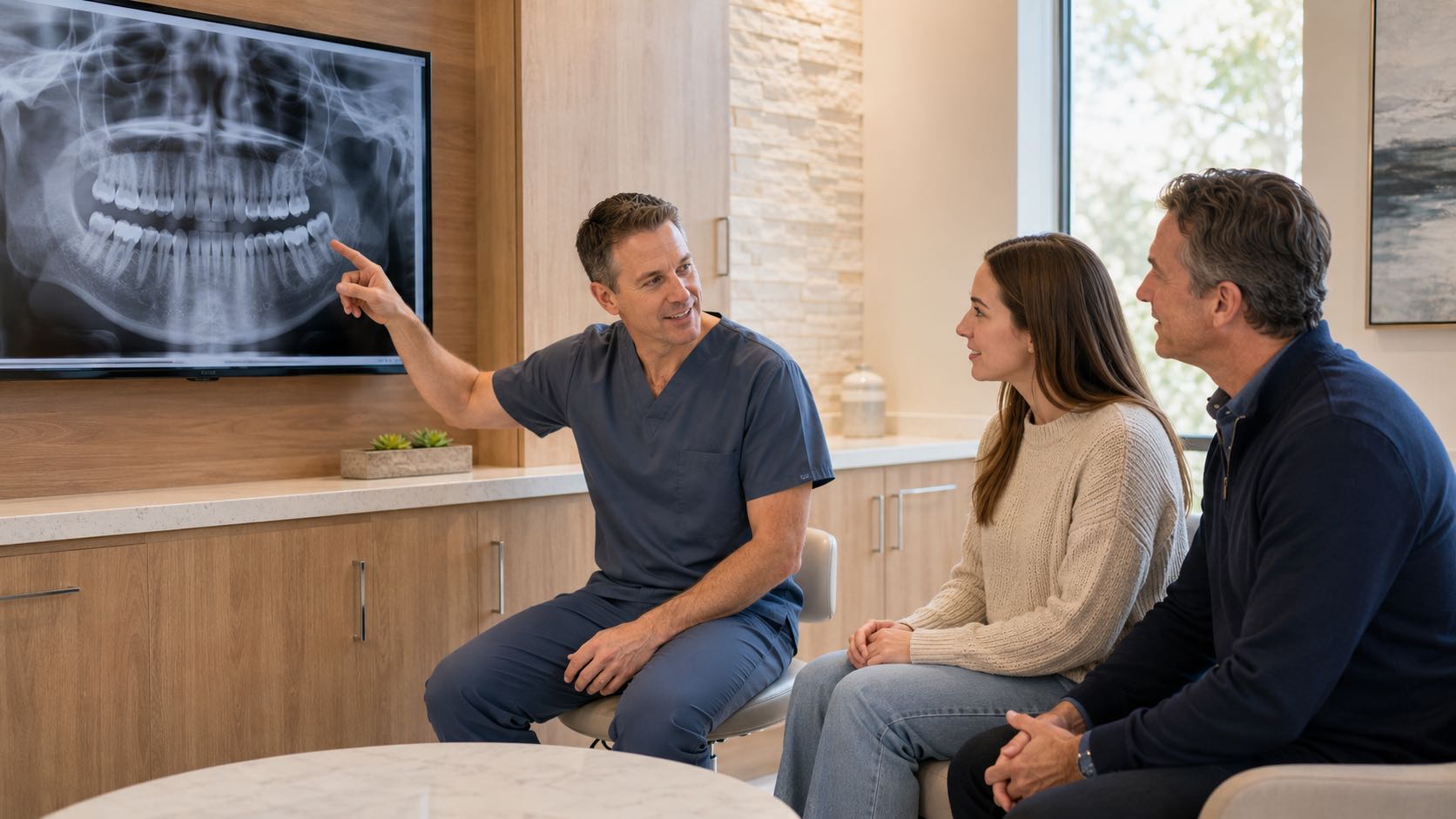
Your surgeon will examine your mouth and review a panoramic X-ray. When appropriate, advanced 3D imaging may be used to better understand the position of the teeth and their relationship to nearby nerves, sinuses, and other structures.
We will explain what we see and whether removal or continued monitoring is recommended.

Step 2
A Personalized Comfort Plan
Every patient and every extraction is different. Your surgeon will discuss the anesthesia or sedation options appropriate for your procedure, medical history, and comfort level.
You will have the opportunity to ask questions and receive clear instructions about eating, drinking, medications, transportation, and preparing for your appointment.
Step 3
Your Procedure
Once you are comfortable and the selected anesthesia has taken effect, your surgeon will remove the wisdom teeth.
For impacted teeth, this may involve making a small opening in the gum, removing a limited amount of surrounding bone, or dividing the tooth into smaller sections. These techniques allow the tooth to be removed as carefully and efficiently as possible.
After treatment, our team will monitor you before you leave the office. If you receive sedation, you will need a responsible adult to drive you home and follow the instructions provided by your care team.


Step 4
Recovery and Follow-Up
Swelling, soreness, and some jaw stiffness are normal after wisdom teeth removal. Many patients begin returning to their usual routine within several days, although recovery varies based on the number and position of the teeth removed.
Plan to rest, use cold packs as directed, stay hydrated, and eat soft foods during the beginning of your recovery. We will give you detailed instructions specific to your procedure and remain available if you have questions after leaving the office.
The Sierra Oral & Facial Surgery team also follows up with patients after treatment because our care does not end when the procedure is complete.
Ask About EXPAREL
For appropriate patients, Sierra Oral & Facial Surgery offers EXPAREL as one option within a personalized postsurgical comfort plan. Your surgeon can explain how it works and whether it may be appropriate for your procedure.
Why Patients Choose Sierra Oral & Facial Surgery
Care Centered Around You
We listen to your concerns, explain your options, and develop a treatment plan based on your individual needs.
Experience You Can Trust
Our doctors have advanced training in oral and maxillofacial surgery and experience treating both routine and complex wisdom teeth cases.
Comfort Throughout Treatment
We offer personalized anesthesia options and take time to help patients feel prepared before their procedure.
Support During Recovery
You will receive detailed aftercare guidance, access to helpful resources, and follow-up from a team that remains invested in your recovery.
Get to Know Your Oral Surgeons
Meet the experienced doctors who will guide you through your wisdom teeth evaluation, treatment, and recovery.

Ryan R. Falke, DDS
Dr. Falke completed his Oral and Maxillofacial Surgery residency at Loma Linda University, where his training included wisdom tooth removal, dental implants, corrective jaw surgery, facial trauma, facial reconstruction, and facial cosmetics. He combines comprehensive surgical experience with a commitment to Compassion, Comfort, and Expertise.

Kimberly Bentjen, DDS, MD
With training in both dentistry and medicine, Dr. Bentjen brings a comprehensive perspective to oral and facial surgery. Her collaborative, team-focused approach helps create an environment in which patients can feel informed, reassured, and confident in their care.
★★★★★
What Our Patients Are Saying
“Got my wisdom teeth removed by Dr. Bentjen and she was easily one of the best doctors I have ever met. She already knew what questions I may have had and thoroughly went over all information to help me recover. I had some anxiety before the procedure, but Dr. Bentjen was very understanding and reassuring.”
— T W.
Ready to Learn More About Your Wisdom Teeth?
Whether you have been referred by your dentist, are planning ahead for your teenager, or need relief from current symptoms, our team is ready to help.
Schedule an evaluation to learn whether wisdom teeth removal or continued monitoring is right for you.